Pay for AI API Credits With Crypto: USDT, USDC, BTC, and More
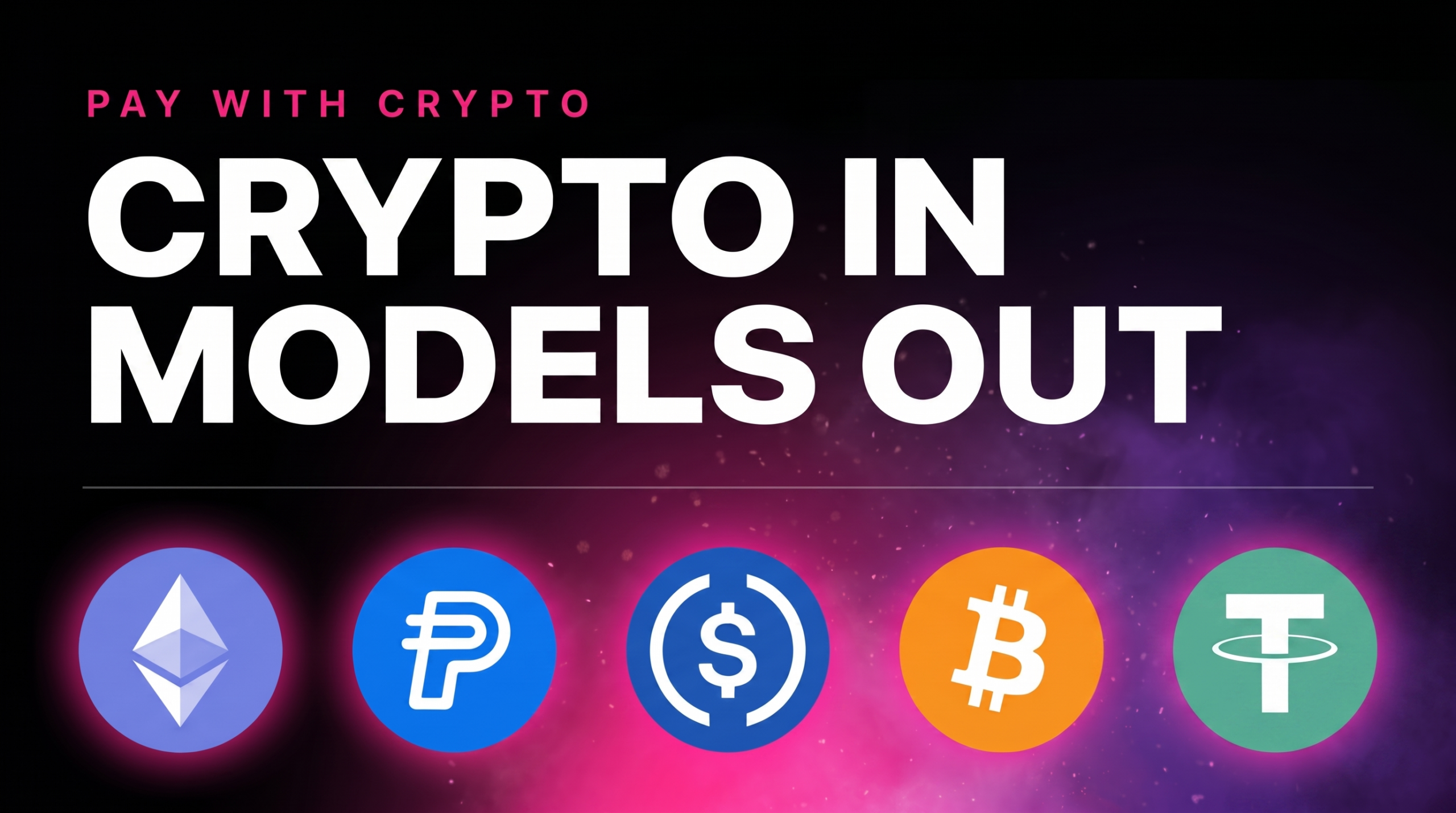
You cannot pay OpenAI, Anthropic, or Google for API access with cryptocurrency. None of them accept USDT, USDC, Bitcoin, or any other digital asset in their billing settings, and none have announced plans to. The working method is an OpenAI compatible AI API gateway that accepts crypto deposits: you fund a balance with USDT, USDC, BTC, ETH, or PYUSD, receive one API key, and call Claude, GPT, Gemini, DeepSeek, and hundreds of other models through a single endpoint, with the gateway handling provider billing on your behalf.
This guide covers who accepts what, exactly which coins run on which chains, how the deposit flow works step by step, what platform fees cost you, and the questions people ask before their first top up.
Who accepts crypto for AI API access
| Provider | Accepts crypto directly | What you can pay with |
|---|---|---|
| OpenAI | No | Credit card, or invoicing at volume |
| Anthropic | No | Credit card, or invoicing at volume |
| No | Card and cloud billing account | |
| Most AI API gateways | Varies | Card, and on some, USDT and USDC |
| MixRoute | Yes | USDT, USDC, BTC, ETH, PYUSD, plus Visa, Mastercard, and JCB |
The major model providers are companies running on traditional payment rails. Their billing assumes a credit card, a verified billing address, and often a supporting bank relationship, which is straightforward in some regions and effectively impossible in others.
That gap is why this question gets asked so often. The model is available to everyone. The checkout is not.
Exactly which coins run on which networks
Read this before sending anything, because sending on a network the recipient does not support usually means the funds are gone permanently.
Here is the complete MixRoute deposit matrix.
| Coin | Supported networks | Options |
|---|---|---|
| USDT (Tether) | Ethereum, Arbitrum One, Polygon, Solana, TON Network, Tron | 6 |
| USDC | Ethereum, Arbitrum One, Polygon, Solana | 4 |
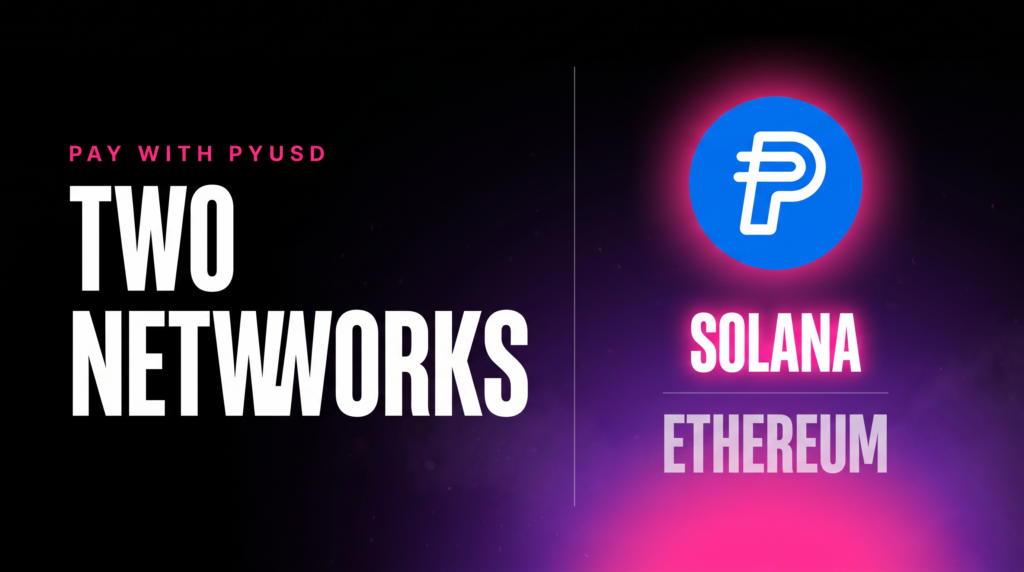
| PYUSD (PayPal USD) | Ethereum, Solana | 2 |
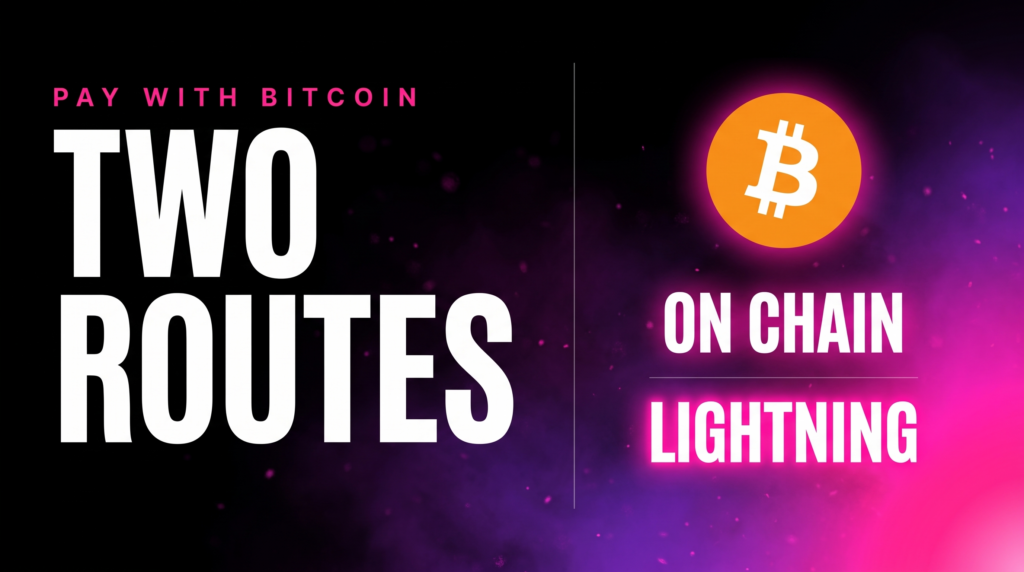
| BTC (Bitcoin) | Bitcoin native, plus Lightning Network | 2 |
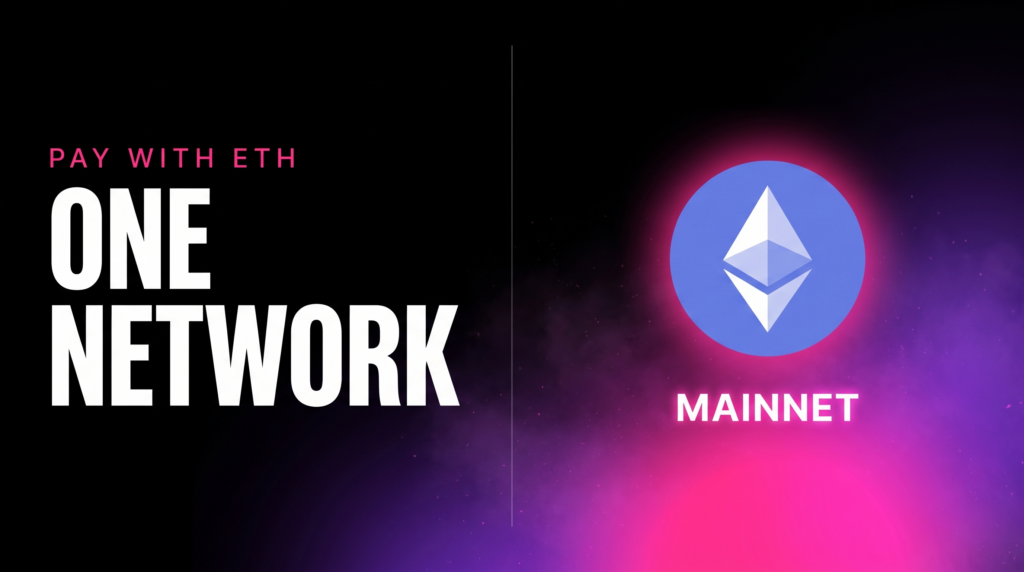
| ETH (Ether) | Ethereum native, ERC-20 | 1 |
Four things stand out, and each one matters practically.
USDT has the widest coverage at six networks. If you hold stablecoin and want maximum flexibility on transfer cost, USDT gives you the most routes in, including the two cheapest rails.
USDC is not available on Tron or TON. This is the trap most likely to catch people. Tron is where an enormous share of stablecoin volume lives, so reaching for it is muscle memory. If you hold USDC, your options are Ethereum, Arbitrum One, Polygon, or Solana. Sending USDC on Tron will not arrive.
Bitcoin includes Lightning. On-chain Bitcoin has historically been impractical for smaller top ups, because fees and confirmation times do not scale down well. Lightning changes that, making small and frequent Bitcoin deposits genuinely viable rather than theoretical.
ETH is mainnet only, which means no cheap route. Ether deposits run on native Ethereum, so you pay mainnet gas whatever the size of the transfer. That is fine for a large deposit where gas is a rounding error, and poor for a small one. If you hold both ETH and a stablecoin, the stablecoin will almost always be cheaper to send.
MixRoute’s own warning on the deposit screen is worth repeating: sending funds on the wrong network will result in a loss of your funds.
The cheapest route for each coin
Once you know what is available, the choice is transfer cost. Fees fluctuate, so treat this as relative guidance rather than fixed numbers.
| If you hold | Send on | Avoid |
|---|---|---|
| USDT | Tron or Solana | Ethereum, unless your funds are already there |
| USDC | Solana or Polygon | Ethereum, and note Tron is not an option at all |
| PYUSD | Solana | Ethereum, unless your funds are already there |
| BTC | Lightning for small amounts | On-chain for small amounts, where fees dominate |
| ETH | Ethereum, the only option | Nothing to avoid, but expect mainnet gas |
Ethereum mainnet appears in the avoid column repeatedly for one reason: gas fees are the highest of any network here and they do not shrink with your transfer size, so they hurt most on small deposits. Use it when that is genuinely where your funds sit and bridging would cost more than sending directly.
Solana is the most broadly useful cheap rail on this list, since it is available for all three stablecoins.
Three rules prevent almost every deposit problem.
Send only on a network the deposit screen lists for that specific coin. Availability differs per coin, as the matrix shows. USDC on Tron is the most likely mistake.
Send the token, not a wrapped variant, unless the deposit screen says otherwise.
Account for the sender fee. If you send exactly the amount you want credited, network fees may come out of it depending on your wallet.
How an AI API gateway solves it
An AI API gateway is a single endpoint that routes your requests across many models. You hold one balance and one API key, and the gateway settles with each underlying provider behind the scenes.
Because you are paying the gateway rather than the model provider, the gateway decides which payment methods it accepts. If it takes USDT, your stablecoin now reaches every model it routes to, including models from providers that would never accept crypto directly.
The other advantage is that the gateway speaks the OpenAI compatible format, so the change to your code is a base URL and a model string rather than a new integration.
from openai import OpenAI

client = OpenAI(
    api_key="sk-your-mixroute-key",
    base_url="https://api.mixroute.ai/v1",
)

# Call a GPT model
response = client.chat.completions.create(
    model="gpt-5.5",
    messages=[{"role": "user", "content": "Hello"}],
)

# Switch to Claude by changing only the model name
response = client.chat.completions.create(
    model="claude-opus-4-8",
    messages=[{"role": "user", "content": "Hello"}],
)
Same client library, same request shape. The only thing that changed upstream is how the balance got funded.
How to pay for AI API credits with crypto: step by step
Step 1: Create an account and generate a key. Sign up with an email address. No credit card is required to start, and new accounts receive free signup credit so you can test a model before depositing anything.
Step 2: Open the console and choose a crypto top up. Select your coin: USDT, USDC, BTC, ETH, or PYUSD.
Step 3: Select the network. The screen shows which networks are available for the coin you picked, and availability differs per coin. Match it to where your funds actually sit. This is the single most common place people lose money.
Step 4: Send to the deposit address. Copy the address rather than typing it, and send a small test amount first if this is your first deposit and the amount is large.
Step 5: Save the transaction hash and wait for confirmation. The deposit credits once it confirms on chain, not the instant you hit send. Until your balance updates, the transaction hash is your receipt.
Step 6: Start calling models. Your balance is spendable per token across every model the gateway supports, and on MixRoute those credits never expire.
Why developers pay with crypto
Four legitimate reasons account for nearly all of it.
Card access. Large parts of the world have limited access to internationally accepted cards, or hold cards that get declined by US billing systems. The developer is willing and able to pay. The payment method simply does not work.
Getting paid in crypto already. Freelancers and remote contractors increasingly receive income in USDT or USDC. Converting to fiat, moving it through a bank, then paying by card adds fees and days to something that could settle in minutes.
Treasury preference. Some businesses hold operating funds in stablecoins or in BTC and ETH, and prefer paying vendors from that balance rather than maintaining a separate fiat float.
Autonomous systems. Agent workloads consume credits unpredictably and can exhaust a balance without warning. Teams running them often prefer funding a topped up balance directly rather than depending on card authorizations.
None of that requires the model providers to change anything. It requires one layer in front of them that speaks both languages.
What platform fees actually cost you
This is where gateways differ in real money, because platform fees are charged at funding time and come out of your token budget rather than showing up per request.
OpenRouter, the most widely used gateway, publishes a platform fee on credit purchases: 5.5% on card purchases with a $0.80 minimum, and 5% on crypto. Per token model rates are passed through without markup, so the fee sits entirely on the funding transaction.
The arithmetic is simple either way you look at it. A team putting $10,000 a year through a 5% platform fee pays roughly $500 for the privilege of funding the account, before a single token is generated.
| Annual funding | 5% platform fee | Zero platform fee |
|---|---|---|
| $1,000 | about $50 in fees | $0 in fees |
| $10,000 | about $500 in fees | $0 in fees |
| $100,000 | about $5,000 in fees | $0 in fees |
The minimum fee matters at the small end too. A $0.80 floor on a $5 top up works out to an effective 16%, which makes small frequent top ups the most expensive way to fund a fee charging account.
MixRoute charges zero markup on provider pricing and no platform fee on top ups, so the amount you send is the amount you can spend. That is possible because MixRoute earns through cloud reseller partnerships rather than by taking a cut of your usage. Fee structures change, so verify current terms with any provider before committing to volume.
What to check before choosing a crypto friendly gateway
Total cost, not headline markup. A gateway advertising no markup on tokens may still take a percentage at funding time. Add both together.
Which coins and which networks. Not the same question. A gateway may accept USDC but not on the chain where you hold it. Check the matrix, not just the coin list.
Whether credits expire. Some balances have a validity window. MixRoute credits do not expire.
Model coverage. The point of paying a gateway is reaching many models on one balance, so check the catalogue includes what you actually use.
Failover behaviour. If a provider goes down, does the gateway reroute automatically or does your application fail with it.
How enterprise settles. Self serve and enterprise are usually different paths. On MixRoute, enterprise accounts settle by bank wire with an invoice and unlock the full enterprise package including Reserved Capacity.
Where MixRoute fits
MixRoute is an AI API gateway built for exactly this kind of access: one OpenAI compatible API across 200+ models, crypto accepted across USDT, USDC, BTC, ETH, and PYUSD alongside Visa, Mastercard, and JCB, zero markup on provider pricing, automatic failover when a provider drops, and credits that never expire. New accounts include free signup credit, so you can confirm the whole flow works before depositing anything.
The practical result is that a developer holding crypto and no usable credit card gets the same model access as a team with a corporate card, through the same OpenAI compatible endpoint. Start building on MixRoute
FAQ
Can I pay for the OpenAI API with crypto?
Not directly. OpenAI accepts credit cards and, at volume, invoicing, with no cryptocurrency option in its billing settings. To reach OpenAI models using crypto, fund an OpenAI compatible gateway with USDT, USDC, or another supported coin and call the models through that gateway’s endpoint, which handles provider billing for you.
Can I pay for the Anthropic or Claude API with crypto?
Anthropic does not accept cryptocurrency for API access. The same approach applies: deposit crypto with a gateway that routes to Claude models, then call them through the gateway’s OpenAI compatible endpoint using one API key.
Which networks does MixRoute support for USDT?
Six: Ethereum, Arbitrum One, Polygon, Solana, TON Network, and Tron. That is the widest network coverage of any coin on the platform, so USDT is the most flexible option if you want a choice of transfer cost.
Which networks does MixRoute support for USDC?
Four: Ethereum, Arbitrum One, Polygon, and Solana. USDC is not available on Tron or TON Network, which catches people out because Tron is where a large share of stablecoin volume sits. If you hold USDC on Tron, you will need to bridge or swap before depositing.
Can I deposit PYUSD, and on which networks?
Yes. PYUSD is supported on Ethereum and Solana. Solana is the cheaper of the two for transfer fees, so use it unless your PYUSD already sits on Ethereum.
Can I pay for AI API access with Bitcoin?
Yes on MixRoute, on the native Bitcoin network and over Lightning. Lightning is the better choice for smaller deposits, since on-chain fees and confirmation times make small Bitcoin transfers impractical. Note that most gateways do not accept Bitcoin at all, so check before assuming.
Can I deposit ETH?
Yes, on the native Ethereum network as a standard ERC-20 transfer. That is the only option for ETH, so you pay Ethereum mainnet gas regardless of transfer size. For a small deposit, a stablecoin on a cheaper chain will usually cost less to send.
Is USDC or USDT better for paying API credits?
USDT has broader network coverage on MixRoute, six chains against four, including Tron and TON which USDC does not support. If you already hold one, use that. If you are choosing, USDT gives more routing options and access to the cheapest rails.
Which network is cheapest for depositing?
For USDT, Tron or Solana. For USDC, Solana or Polygon. For PYUSD, Solana. For Bitcoin, Lightning. Ethereum mainnet is usually the most expensive because gas fees do not shrink with transfer size, so they hurt most on small deposits. Fees fluctuate, so check current conditions before a large transfer.
What happens if I send on the wrong network?
The funds are usually unrecoverable. This is why the deposit screen warns about it explicitly and why you should confirm the network before sending rather than assuming. Sending a small test amount first is cheap insurance on a large deposit.
Can I pay for AI APIs without a credit card?
Yes, through a gateway that accepts crypto deposits. This is the main reason developers use one, since the major model providers require a card or a business invoicing relationship. MixRoute requires no credit card to start and issues an API key immediately.
Do crypto deposits cost more than paying by card?
It depends on the platform. Some gateways charge a percentage on credit purchases, commonly around 5%, which comes out of your usable credit. On MixRoute there is zero markup on either method, so the full value of your top up reaches your tokens whether you pay by crypto or card.
How long does a crypto deposit take to credit?
Typically minutes, once the network confirms the transaction. Solana, Polygon, Tron, TON, and Lightning confirm quickly. Ethereum can be slower during congestion, and on-chain Bitcoin is the slowest of the options. Keep the transaction hash until your balance updates.
Do AI API credits expire?
On some platforms they do. MixRoute credits have no expiration, whether you funded them by crypto, card, or an enterprise plan.
How do enterprise accounts pay?
Enterprise plans typically settle by bank wire with an invoice and flexible terms rather than self serve top ups, and on MixRoute that path unlocks the full enterprise package including Reserved Capacity.
The bottom line
No major model provider accepts cryptocurrency for API access, and that is unlikely to change. The working path is an OpenAI compatible gateway that takes crypto deposits, turning a USDT, USDC, BTC, ETH, or PYUSD balance into usable credit across every model it routes to.
Get the coin and network pairing right, since that is where deposits are lost, and remember the two are not the same question. USDT runs on six networks. USDC runs on four and is not available on Tron or TON. PYUSD runs on Ethereum and Solana. Bitcoin supports Lightning. Ether is mainnet only. Compare funding fees alongside token markup, because a 5% platform fee is a real reduction in what you can spend.
MixRoute accepts all five, requires no credit card to start, charges zero markup on provider pricing, and puts 200+ models behind one OpenAI compatible endpoint with credits that never expire. Start building on MixRoute