How to Pay for AI APIs With Bitcoin, On Chain or Over Lightning
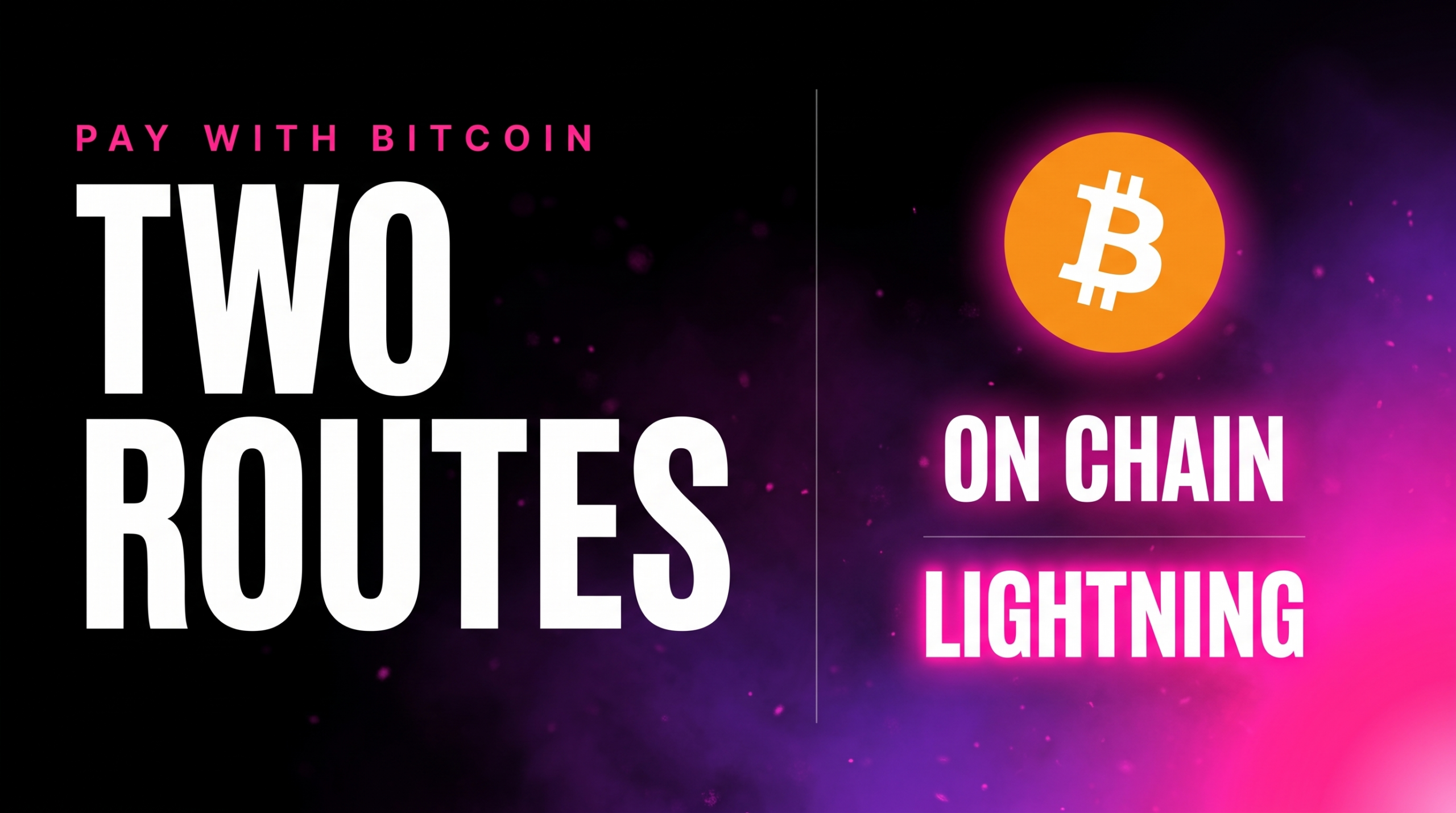
You cannot pay OpenAI, Anthropic, or Google for API access with Bitcoin. None of them accept crypto in their billing settings. The working method is an OpenAI compatible gateway that takes BTC deposits, and on MixRoute you have two ways in: the native Bitcoin network, or the Lightning Network.
That second option matters more than it sounds. Bitcoin support is uncommon among AI API gateways, and Lightning support rarer still. OpenRouter, the largest of them, states in its own documentation that it accepts credit cards, AliPay, and USDC, with no Bitcoin option at all. Lightning is the difference between Bitcoin being impractical for small top ups and being one of the fastest, cheapest options available.
Quick answer
Fund an OpenAI compatible gateway with BTC, get one API key, and reach 200+ models through a single endpoint. No card, no KYC to start. Choose Lightning for small or frequent deposits, where it is near instant and costs a fraction of a cent. Choose the on chain Bitcoin network for larger amounts, where the fee is negligible relative to the transfer.
The two ways to send Bitcoin
| Route | Fee | Speed | Best for |
|---|---|---|---|
| Lightning Network | A fraction of a cent | Seconds | Small and frequent top ups |
| Bitcoin on chain | Varies with network demand | Around ten minutes per confirmation | Larger deposits |
This is the choice that defines the page, so it is worth understanding what each one actually is.
Bitcoin on chain is the base layer. Your transaction goes into a block, and blocks are produced roughly every ten minutes on average. Services typically wait for one or more confirmations before crediting, so plan for minutes rather than seconds. Fees are charged by transaction size in data terms rather than by the amount you are sending, and they rise and fall with how busy the network is.
Lightning is a payment layer built on top of Bitcoin. Payments settle in seconds and cost a tiny fraction of what an on chain transaction does, because they are not individually written into blocks. It is designed for exactly the kind of transaction an API top up usually is: modest amounts, sent more than once.
Why Lightning changes the maths for Bitcoin
On chain Bitcoin has a structural problem for small payments, and it is the same problem Ethereum mainnet has. The fee is tied to transaction size in data, not to the value being moved. Sending a small amount and a large amount cost roughly the same.
That makes a small on chain Bitcoin deposit disproportionately expensive, and it is why Bitcoin has historically been awkward as a payment rail despite being the most recognised crypto asset.
Lightning removes that constraint. Because payments settle off chain, the cost is negligible regardless of size, and confirmation is effectively instant. A small top up over Lightning is cheaper and faster than the same amount sent as USDT on almost any chain.
The practical consequence. If you hold Bitcoin and want to fund an API balance, Lightning is very likely the right route unless the deposit is large.
Choosing between them
Use Lightning when:
- The deposit is small or moderate
- You top up regularly rather than once
- You want the balance available immediately
- You already have a Lightning enabled wallet
Use the on chain network when:
- The deposit is large enough that the fee is a rounding error
- Your Bitcoin sits somewhere without Lightning support, such as certain exchanges or cold storage
- You would rather not deal with Lightning wallet setup for a one off transfer
A note on Lightning at size. Lightning is built around payment channels with finite capacity, so very large payments can be harder to route than small ones. For a substantial deposit, the on chain route is the more predictable choice, and the fee will be trivial relative to the amount anyway.
Before you send: the volatility question
Bitcoin is not a stablecoin. Unlike USDT, USDC, and PYUSD, it has no dollar peg, so depositing it converts a price exposed asset into fixed dollar credit at that moment’s rate. If Bitcoin rises afterward your balance does not rise with it, and if it falls your balance is unaffected.
This lands differently for Bitcoin than for most assets, because a lot of people holding it are holding it deliberately and long term. If that describes you, spending it on operating costs means giving up that position, and paying from a stablecoin instead is a perfectly reasonable choice. Nothing about using this gateway requires you to spend Bitcoin you would rather keep.
If Bitcoin is simply what you have available, or you were converting some to cover costs regardless, depositing it directly saves you a conversion step and its fees.
One thing worth flagging: in many jurisdictions, spending a volatile asset is treated differently from spending a stablecoin for accounting and tax purposes. Rules vary by country and by circumstance, so if this runs through a business, ask an accountant familiar with your situation rather than assuming it works the same way.
How to pay for AI APIs with Bitcoin, step by step
Step 1: Create your account
Sign up with an email address. No identity document, no card, no business verification. New accounts include a starting credit, so you can test a model and confirm the flow works before depositing anything of your own.
Step 2: Select BTC on the deposit screen
Choose BTC (Bitcoin) from the coin list. The deposit screen shows both routes, with Lightning available as a toggle.
Step 3: Choose Lightning or on chain
Decide using the guidance above. Small or frequent, Lightning. Large or single, on chain.
Follow exactly what the deposit screen shows for the route you pick, since the two work differently and the details differ between them.
Step 4: Send from your wallet
Copy whatever the deposit screen gives you rather than typing it by hand.
For a large on chain deposit, consider sending a small test amount first, confirming it credits, then sending the rest. On Bitcoin this costs a second fee, so weigh it against the size of the transfer. On Lightning that step is usually unnecessary, since a payment either succeeds within seconds or fails outright rather than sitting in an uncertain state.
Step 5: Wait for confirmation
Lightning settles in seconds.
On chain takes longer. Blocks arrive roughly every ten minutes on average, and services generally wait for at least one confirmation before crediting. Save your transaction ID, because until the balance updates it is your proof the transfer happened.
Step 6: Generate your API key and make a call
Create a key in the console and copy it once. Store it in an environment variable, never in client side code, and never commit it to a repository.
from openai import OpenAI

client = OpenAI(
    base_url="https://api.mixroute.ai/v1",
    api_key="YOUR_MIXROUTE_KEY",
)

response = client.chat.completions.create(
    model="claude-opus-4-8",
    messages=[{"role": "user", "content": "Say hello in one sentence."}],
)

print(response.choices[0].message.content)
Make sure the base URL ends in /v1. That trailing path is what tells the SDK it is talking to an OpenAI compatible server, and leaving it off is the most common setup mistake.
Switching models is a one string change. Same key, same base URL, different model ID from the catalog.
If your Bitcoin deposit does not arrive
On chain, check the transaction ID on a Bitcoin block explorer. If it shows as unconfirmed, it may simply need more time, particularly if you sent with a low fee while the network was busy. Low fee transactions can sit unconfirmed for a long stretch during congestion. If it shows confirmed and the funds reached the deposit address, contact support with the transaction ID.
On Lightning, payments either succeed or fail quickly, and a failed payment normally returns the funds to your wallet rather than leaving them in limbo. If a payment failed to route, try again, or fall back to the on chain route.
If you sent Bitcoin to an address for a different asset, or sent a different asset to a Bitcoin address, the funds are generally unrecoverable. Contact support with the transaction ID regardless, but treat recovery as unlikely.
The USDT deposit guide has a fuller troubleshooting walkthrough that applies to crypto deposits generally.
Other ways to pay
Bitcoin is one of several options. MixRoute also accepts:
- USDT on Ethereum, Arbitrum One, Polygon, Solana, TON Network, and Tron
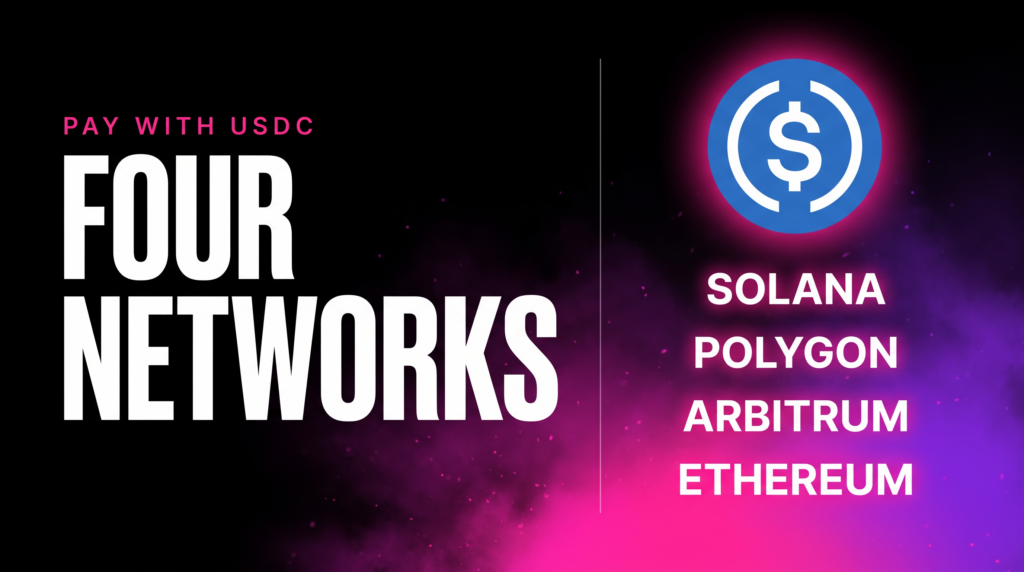
- USDC on Ethereum, Arbitrum One, Polygon, and Solana
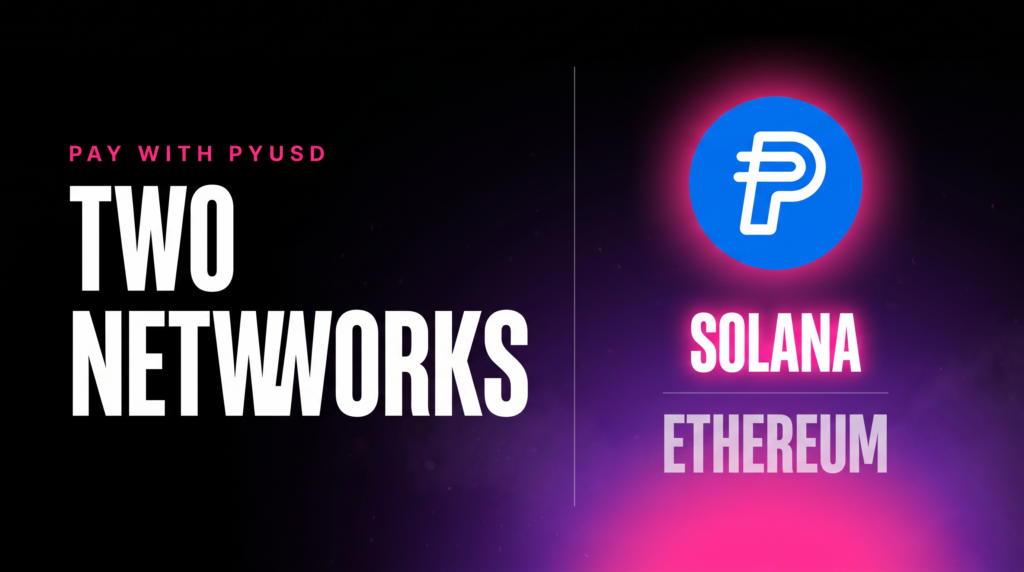
- PYUSD (PayPal USD) on Ethereum and Solana
- ETH on Ethereum mainnet
- Cards via Visa, Mastercard, and JCB
The full crypto payment guide covers every coin with its supported networks.
How the options compare
| Option | Takes Bitcoin | Lightning | KYC to start | Platform fee on deposit |
|---|---|---|---|---|
| OpenAI, Anthropic, Google direct | No | No | Account plus card | Not applicable |
| Most AI API gateways | Rarely | Almost never | Account required | Varies |
| OpenRouter | No, USDC only | No | Account required | 5% on crypto, 5.5% on card |
| MixRoute | Yes | Yes | No KYC | Zero |
Bitcoin support is genuinely uncommon among AI API gateways, and Lightning support is rarer still. OpenRouter, the largest of them, states in its own documentation that it accepts credit cards, AliPay, and USDC, with no Bitcoin option at all. If Bitcoin is what you hold, that narrows your options considerably before fees even enter the picture.
FAQ
Can I pay for AI API access with Bitcoin?
Not with OpenAI, Anthropic, or Google directly, since none of them accept crypto. You can through an OpenAI compatible gateway that takes BTC deposits. On MixRoute, Bitcoin is accepted both on the native network and over Lightning, and converts to API credit you can spend across 200+ models with one key.
Does MixRoute support the Lightning Network?
Yes. Lightning is available as an option when you select BTC on the deposit screen. It settles in seconds and costs a fraction of a cent, which makes small Bitcoin deposits practical in a way on chain transfers are not.
Should I use Lightning or the on chain Bitcoin network?
Lightning for small or frequent deposits, where it is faster and dramatically cheaper. On chain for larger deposits, where the fee is negligible relative to the amount and routing is more predictable than it can be for very large Lightning payments.
Why is Lightning cheaper than on chain Bitcoin?
Because Lightning payments settle off chain rather than being individually written into blocks. On chain Bitcoin fees are charged by transaction size in data terms rather than by the amount sent, so a small transfer costs roughly the same as a large one. Lightning removes that floor.
How long does a Bitcoin deposit take?
Lightning settles in seconds. On chain, Bitcoin blocks are produced roughly every ten minutes on average and services generally wait for at least one confirmation, so plan for minutes. A transaction sent with a low fee during congestion can take considerably longer.
Does depositing Bitcoin lock in the price?
Yes. Your BTC converts to dollar denominated API credit at the rate when it credits. If Bitcoin rises afterward your balance does not rise with it, and if it falls your balance is unaffected. This is the main difference from depositing a stablecoin, which is a transfer rather than a conversion.
Does paying with Bitcoin require KYC?
Not on MixRoute. You start with an email, fund with BTC, and generate an API key without submitting identity documents.
Do I pay a markup on models versus going direct?
No markup on tokens. You pay the same per token rate you would pay the provider directly. The difference is one key and one bill instead of several separate accounts, plus automatic failover when a provider has problems.
Do my credits expire?
No. MixRoute credits have no expiration regardless of how you funded them.
The bottom line
You can fund AI API credits with Bitcoin, on the native network or over Lightning, with no KYC and no platform fee.
Lightning is the one to know about. It removes the fee floor that has always made small Bitcoin payments impractical, settling in seconds for a fraction of a cent. For a modest top up it is faster and cheaper than almost any other route on this platform, and very few gateways offer it at all.
Use Lightning for small and frequent deposits, the on chain network for large ones. And be deliberate about the conversion, since Bitcoin is not a stablecoin and depositing it means giving up the position.
MixRoute accepts Bitcoin both ways, alongside USDT, USDC, PYUSD, ETH, and cards. One OpenAI compatible API, 200+ models, credits that never expire. Start building on MixRoute