

Claude Opus 4.8 Is Out. Here Is What Changed, and Why You Shouldn’t Rewire Your Stack for It
5 月 29, 2026 · 7 分鐘閱讀
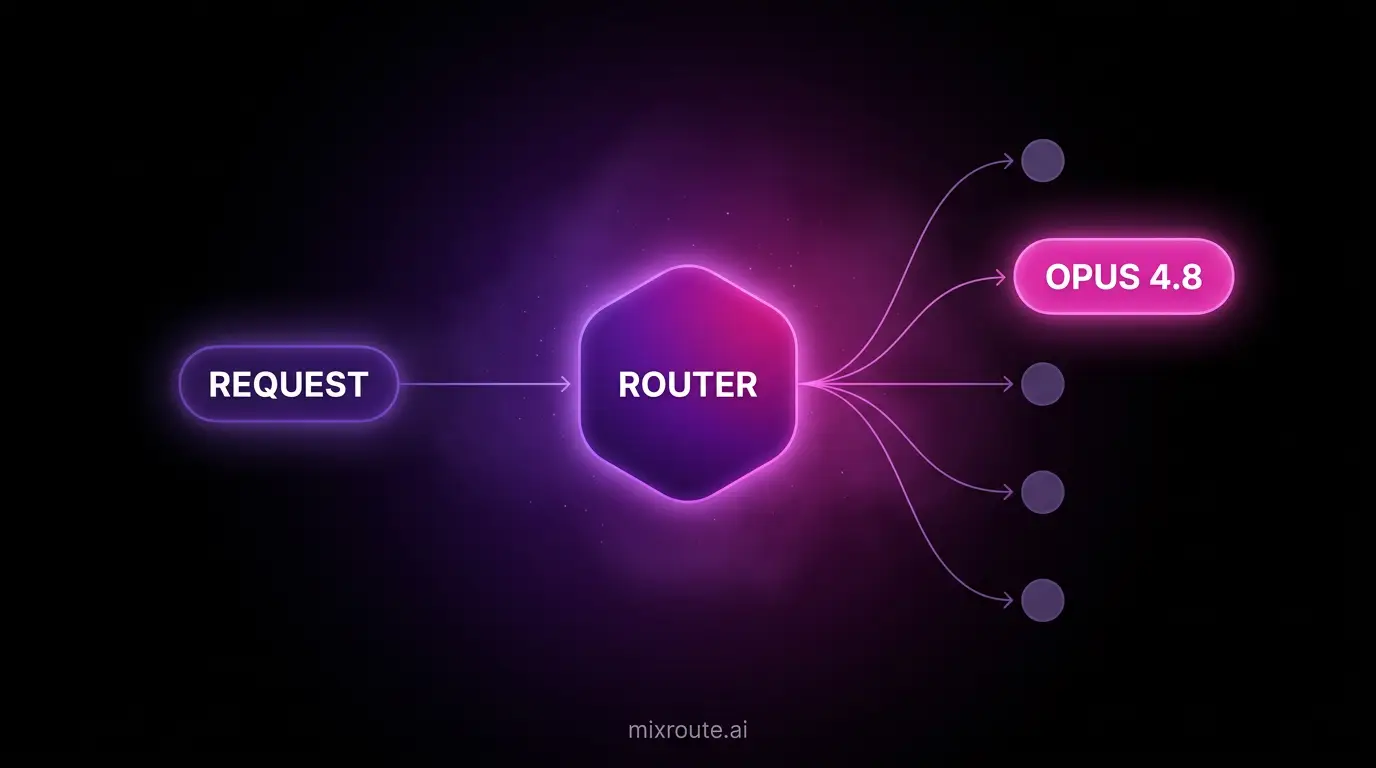
Another flagship model just dropped. Claude Opus 4.8 landed on May 28, less than two months after the last Opus upgrade. If your first instinct was to sigh and wonder whether you need to migrate your stack again, you already understand the real problem. It isn’t the model. It’s the cadence.
This is a builder’s breakdown of what Opus 4.8 actually ships, what the benchmarks say, and what the release tells you about how to architect an AI product that doesn’t need a rewrite every six weeks.
TL;DR: Claude Opus 4.8 is Anthropic’s new flagship, released May 28, 2026, at the same price as Opus 4.7: $5 per million input tokens and $25 per million output. It posts gains in agentic coding (69.2% on SWE-Bench Pro), computer use, and honesty, plus a fast mode that runs at 2.5x the speed and costs three times less than before.
What Claude Opus 4.8 actually ships
Anthropic frames Opus 4.8 as a more effective collaborator that builds on Opus 4.7, available everywhere at the same price. The headline gains are in agentic coding, multidisciplinary reasoning, computer use, knowledge work, and financial analysis.
The numbers Anthropic published against its own predecessor:
| Benchmark | Opus 4.7 | Opus 4.8 |
|---|---|---|
| Agentic coding (SWE-Bench Pro) | 64.3% | 69.2% |
| Multidisciplinary reasoning with tools | 54.7% | 57.9% |
On SWE-Bench Pro, Anthropic says Opus 4.8 outscored both GPT-5.5 and Gemini 3.1 Pro. It does not win everything. GPT-5.5 still leads on the terminal-coding benchmark. On Online-Mind2Web, a browser-agent test, one tester reported Opus 4.8 hitting 84%, a jump over both Opus 4.7 and GPT-5.5. The picture is what it usually is when a new model lands: it takes the lead in several places and trails in others.
The honesty angle is the real story
The differentiator Anthropic is pushing hardest is honesty. Models have a well-known habit of jumping to conclusions and confidently claiming progress when the evidence is thin. Anthropic says Opus 4.8 is roughly four times less likely than its predecessor to let flaws in its own generated code pass unremarked, and that early testers find it more willing to flag uncertainty and less likely to make unsupported claims.
The alignment assessment backs this up. Anthropic reports new highs on prosocial traits like supporting user autonomy, with rates of misaligned behavior substantially lower than Opus 4.7 and close to its best-aligned model, Claude Mythos Preview. For anyone running agents unattended, a model that catches its own mistakes is worth more than a model that scores two points higher and lies about it.
Fast mode, effort control, and dynamic workflows
Three things shipped alongside the model.
Fast mode now runs at 2.5x the speed and costs three times less than it did for previous models. Effort control arrived in claude.ai and Cowork on every plan, letting you trade response speed against reasoning depth. Opus 4.8 defaults to high effort, with “extra” and “max” settings for harder, long-running work.
Dynamic workflows, in research preview, lets Claude Code plan a job, run hundreds of parallel subagents in a single session, and verify outputs before reporting back. Anthropic says this enables codebase-scale migrations across hundreds of thousands of lines of code. It is available on Claude Code for Enterprise, Team, and Max plans. The Messages API also now accepts system entries inside the messages array, so developers can update an agent’s instructions mid-task without breaking the prompt cache.
What it costs
Pricing is unchanged from Opus 4.7.
| Mode | Input ($/M tokens) | Output ($/M tokens) |
|---|---|---|
| Regular | $5 | $25 |
| Fast | $10 | $50 |
The API model string is claude-opus-4-8.
The context around the release
Anthropic was unusually measured about this one, calling Opus 4.8 “a modest but tangible improvement on its predecessor.” The bigger tease is what comes next: Mythos-class models, more intelligent than Opus, currently in limited testing through Project Glasswing and expected to reach all customers in the coming weeks once cyber safeguards are in place.
The launch also shared a date with Anthropic’s $65 billion Series H round, which put its post-money valuation at $965 billion and pushed it past OpenAI. The model race and the funding race are now moving at the same speed.
What this means for developers
Step back from the spec sheet and look at the pattern. Opus 4.8 beats GPT-5.5 on SWE-Bench Pro. GPT-5.5 still beats Opus 4.8 on terminal coding. Gemini 3.5 Flash quietly posts a strong finance-agent number in the footnotes. And a more capable model than all of them is weeks out. No single model wins every task, and the leaderboard reshuffles roughly every month.
If your application is hard-coded to one provider’s SDK and one model name, every one of these launches is a decision and a potential migration. You either chase the frontier and pay for it in engineering time, or you stay put and watch a competitor ship on the better model.
There is a third option, and it is the one that survives the cadence. Put a gateway between your application and the providers. Route each request to the model that wins on that task, swap models with a config change instead of a code change, and fall back automatically when a provider has a bad day. The frontier can move every week and your code does not have to.
That is exactly what MixRoute does. It is an OpenAI-compatible API in front of 50+ models, including Claude Opus 4.8, so adopting the new model is a one-line change to a model string. It picks the best provider per request on price and latency, fails over automatically, and accepts USDT with no KYC, which the direct providers do not. Trying Opus 4.8 against your current model looks like this:
from openai import OpenAI

client = OpenAI(
    base_url="https://api.mixroute.ai/v1",
    api_key="YOUR_MIXROUTE_KEY",
)

response = client.chat.completions.create(
    model="claude-opus-4-8",
    messages=[{"role": "user", "content": "Summarize this changelog."}],
)

print(response.choices[0].message.content)
Change the model string to compare it against GPT-5.5 or Gemini on the same call. No new SDK, no new billing relationship, no rewrite.
FAQ
How much does Claude Opus 4.8 cost? Regular usage is $5 per million input tokens and $25 per million output tokens, unchanged from Opus 4.7. Fast mode is $10 per million input and $50 per million output.
Is Claude Opus 4.8 better than GPT-5.5? It depends on the task. Anthropic says Opus 4.8 beats GPT-5.5 on SWE-Bench Pro agentic coding, while GPT-5.5 still leads on the terminal-coding benchmark. There is no single winner, which is the argument for testing both on your own workload.
What is the API model string for Claude Opus 4.8? claude-opus-4-8 on the Claude API. Through an OpenAI-compatible gateway like MixRoute, you call the same model name without changing your SDK.
What is fast mode in Opus 4.8? A speed setting that runs the model at roughly 2.5x the default speed, now three times cheaper than fast mode was for previous models, priced at $10 per million input and $50 per million output.
Do I have to migrate my code to use Opus 4.8? Not if you route through an OpenAI-compatible gateway. Adopting the new model becomes a one-line change to the model string instead of a stack migration.
Can I pay for the Claude Opus 4.8 API with crypto? Not directly through Anthropic. Through MixRoute you can fund usage with USDT and no KYC, then call claude-opus-4-8 like any other model.
What are dynamic workflows? A Claude Code feature, in research preview, that runs hundreds of parallel subagents in one session to tackle very large jobs like codebase-scale migrations. It is available on Enterprise, Team, and Max plans.
The bottom line
Opus 4.8 is a real step forward on coding, computer use, and honesty, and Anthropic is right to call it modest rather than a revolution. The more useful takeaway is the one the release itself keeps proving: models leapfrog each other constantly, no one model owns every task, and the next frontier is always a few weeks out. Architecting your product around a single model is a bet you have to keep re-placing.
Route instead of rewire. MixRoute gives you Claude Opus 4.8 and 50+ other models behind one OpenAI-compatible API, with per-request routing, automatic failover, and USDT and USDC payments with no KYC. Five minutes from signup to your first call. Start building on MixRoute